
Ghee: Fresh Off the Boat
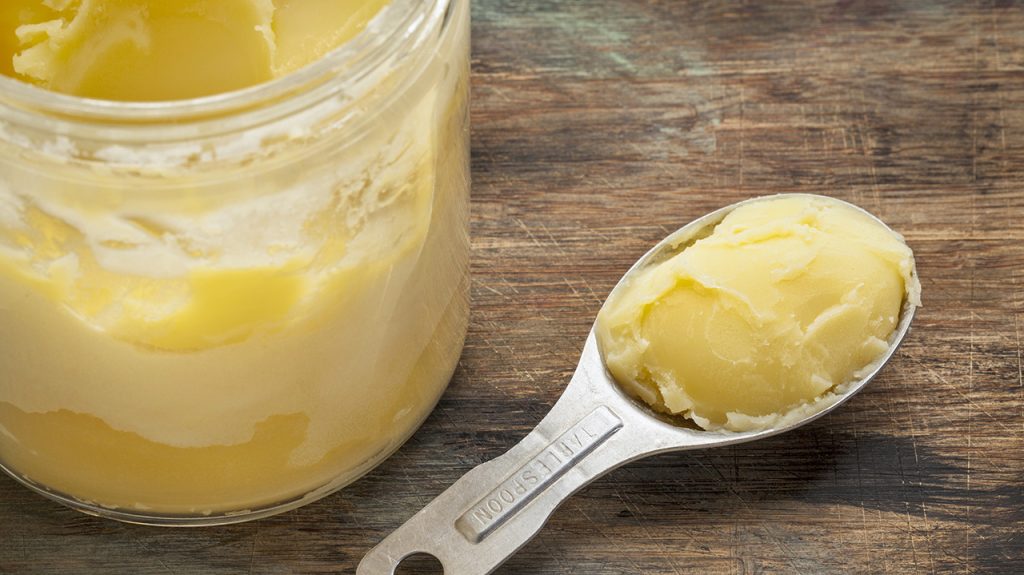
In the US, Ghee is trending now. It is the current darling of millennial foodies, high fat fad diets and Michelin starred restaurants. In the Indian subcontinent, it has been trending since 1500 BC.
Ghee is the golden essence of milk, a source of pure saturated fat hailed for its beautiful nutty flavor, nutrition, shelf life, high smoking point, skin care, curative and sacred powers. It is interwoven in the varied culinary fabric of India, a quintessential ingredient for everything from the simple ghee rice to rich spice laden curries and just about every dessert.
The Vedic period (c.1500 – 500 BCE) is believed to be the period when Ghee originated. While the butter was an accidental discovery by our pastoral ancestors, Ghee was a well thought out invention. It’s mentioned in the Rig Veda that – Ghee helps in igniting the fire started from two pieces of wood and in intensifying its flames. One could speculate that since butter had already been around, they experimented and found butter helpful but not effective because of the water content. To reduce water, it may have been cooked it over fire, and thus creating Ghee. Subsequently as its effects on the digestive fire were realized, it began to be used for cooking food and medicines. Even today ghee is used as an active ingredient in various Ayurvedic remedies.
Ghee’s arrival in the United States was recorded over a century ago through arbitrary mentions by traders and travelers. According to a Forbes article*, “the most meaningful mention is an 1863 recipe for ‘Sinee Kabaub’ in Godey’s Lady’s Book, the most popular magazine of the Civil War era, instructed cooks to baste the skewered meat with a bunch of fowls’ feathers dipped in fresh ghee”. In the early 20th century Indian immigrants brought the knowledge of ghee as they arrived on the shores of America, but it remained an obscure household and restaurant cooking ingredient. It has only arrived in the specialty market grocery aisles since the beginning of this century.
In its most exquisite and authentic way of making, one must first consider the source- the cow, the grass it consumes, microclimes and terroir. These qualities affect the taste of the milk produced. Since ghee is the core of milk, these nuances get concentrated in it. For the very same reasons, it is best to avoid milk with antibiotics, hormones and pesticides.
When a cow is milked, there is whole milk. Cream rises to the top when milk is boiled and then is skimmed off. Then bit of yoghurt is added to the cream to add probiotic benefits. After keeping for 6-8 hours, the cultured cream is then churned. After a while, and all of a sudden, the friction of churning causes the fat globules begin to stick to each other and form butter. What is left over is buttermilk. The fresh butter is placed in a heavy pot; fire turned on the lowest possible setting. The butter melts and starts to bubble and foam up. The foam will disappear naturally while the solids settle to the bottom. The ghee is ready when the butter oil is fragrant, clear, golden and the solids on the bottom are consistent amber. At this point, the liquid is strained and solids discarded. Ghee cools to a sand like granular consistency.
A subtle requirement for ghee making is a positive environment because ghee is highly absorbent, both physically and energetically. It is recommended making it while singing sacred chants and during the waxing moon or a few hours before the full moon, since that will imbibe the pacifying quality of the moon into the consciousness of the food. The moon while well known to create tides and waves in the vast water bodies, very little is known of its impact on the human body which is 70% water. A cynical mind may dismiss these stipulations but having faith in centuries old wisdom is easier done than the improbability of validating through scientific experiments.
In its most rudimentary making, one can buy butter from the supermarket, place in a pot and heat it over a low flame till the milk solids separate and settle at the bottom of the pan. What is left is ghee but more clarified butter than the original sacred ghee. RK Narayan, a well known Indian author writes, “Ghee is, no doubt, clarified butter, but it is also something more, in the same way that wine is more than the juice of a squeezed grape. The origin of ghee is, no doubt, butter, but ghee is like a genius born to a dull parent… A perfectly boiled ghee is considered fit for the gods.”
The future of ghee in the American landscape is indeterminate. It has been industrialized and standardized, on a small scale. Will it take on the exalted commercial status of olive oil? Will it ever get turned into a medicinal elixir? It seems far fetched at the moment but only time and trend will tell.
Author: Annu Verghese