

 There’s only one one rule of getting ingredients. Get the best quality you can afford. It is important to know what is the best quality. And quality ingredients come from a producer who cares about his product and process – be it farmer, butcher or baker.
Once you have your ingredients, a solid, sharp, good quality knife is the first step to mastering the art of cutting, chopping and prepping. Cleaning the produce goes a long way too. Imagine pulling out stringy filaments of beans from your mouth, or worse still, the taste of grit from poorly cleaned green leafy vegetables! These incidents can totally dampen your dining experience. Thus, mastering prep and knife skills will go a long way in building speed and the desired end result. Taking the time to clean spinach, leeks and bok choy will ensure all grit is removed. Cutting meat across the grain or the muscle fibre will create tenderness as opposed to a long stringy chew. Whether you are slicing, dicing, mincing or filleting, a sharp knife is crucial. Having a sharp knife not only makes prep effortless but also prevents accidents. Most accidents occur from slippage of a blunt knife. To learn about how to sharpen, wield a knife and make a variety of cuts go to Knife Skills.
 To really understand technique in cooking we must learn how food responds to heat and most often we have to rely on our own five senses to gauge this process. If you can hear the meat sizzle on the hot pan, or see a sauce bubbling away happily, you’re on the right track. According to Samin Nosrat, “Heat’s sensory cues, including sizzles, spatters, crackles, steam, bubbles, aromas and browning are often more important than a thermometer. All of your senses – including common sense – will help you gauge heat’s effects on food”. Heat on high and the outside will cook faster than the inside. Heat on low won’t result in any browning and will dry out the food. At the end of the day, the choice of cooking technique depends on the final result we are looking for. Wet heat cooking includes boiling, blanching, reducing, poaching, steaming and braising. Dry heat method includes baking, deep frying, sautéing, sweating, toasting, roasting and grilling. When dry heat interacts with food, the water in the food will evaporate and result in a crispy or dry state. Vegetables with high water content will turn limp. When wet heat interacts with food it adds hydration and tenderness. To learn more on how to apply and master the heat, go to Cooking Techniques.
And finally it is all about balance. The balance between salty, sweet, sour and bitter tastes. Tastes are interconnected, like the notes to a symphony.
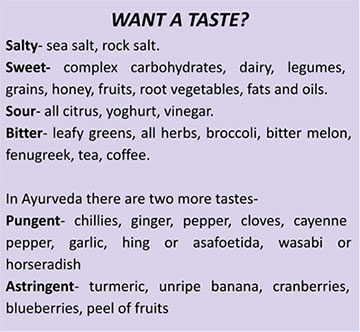
Different notes can add complexity to a dish. Other factors that impact taste are smell and texture. Balance can be achieved by layering the flavours. One also needs to develop a habit of tasting. Stir, taste, adjust. For example, in a dish of stewed lentil or dal (sweet base) adding salt, lemon juice, garlic, green chillies, coriander leaves and ghee will round out the flavours.
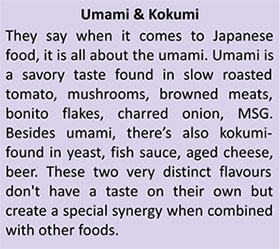
The addition of coriander leaves and ghee at the very end brings out the aromas. Topping with crispy fried onions will add crunchy texture to the soft dal. Taste. If you added too much salt, add more lemon juice. Taste again and adjust. If the heat of the green chilli is overpowering, add a pinch of sugar. Adding water dilutes all flavours. Taste and adjust till it sings in your mouth! Read Balancing, Layering and Restraint to learn more about the nuances of balancing flavours. Being in tune with the senses is a meditative quality, and when we succeed in bringing that essence to the plate it only results in unhindered joy all around! As someone rightly said, “ Life is but endlessly delicious and we must all have a taste!”
Author: Annu Verghese